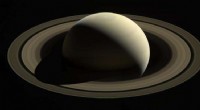
1. Rings: Saturn is most well-known for its iconic rings, which are made up of ice particles, rocks, and dust. The rings are incredibly thin, with some only being a few meters thick. They stretch across hundreds of thousands of kilometers, however. The rings are divided into several divisions, each with its own distinct characteristics.
2. Moons: Saturn has an extensive system of moons, with over 60 confirmed so far. The largest moon, Titan, is larger than Mercury and is the only known moon in the Solar System to have a dense atmosphere. Titan's atmosphere is composed primarily of nitrogen, similar to Earth's atmosphere, and it even has lakes and seas of liquid hydrocarbons on its surface.
3. Axial Tilt: Saturn's axial tilt is approximately 26.7 degrees, which is greater than Earth's axial tilt. This tilt is responsible for Saturn's distinct seasons, which last approximately seven Earth years. During the summer season, the Sun shines almost continuously on the planet's north pole, while during winter, it is continuous darkness.
4. Storms: Saturn is known for its powerful storms, including the Great White Spot. This storm appears periodically, about once every 30 years, and is characterized by a massive white cloud that can be seen from Earth-based telescopes. The Great White Spot is caused by the upwelling of warm air from Saturn's interior.
5. Hexagonal Shape: Saturn's northern polar vortex, known as the hexagon, is a mysterious and unique feature of the planet. The hexagon is a six-sided, regular-shaped jet stream that encircles the north pole. It is not fully understood how the hexagon formed, and scientists are still actively studying it.
6. Inner Core: Saturn's interior is primarily made up of hydrogen and helium, but it is believed to have a solid inner core of rock and ice. The core is thought to be approximately the size of Earth and is extremely hot, with temperatures reaching several thousand degrees Celsius.
7. Magnetic Field: Saturn has a powerful magnetic field, which is generated by the movement of liquid metallic hydrogen in the planet's interior. The magnetic field is more than 20 times stronger than Earth's, creating a vast magnetosphere that extends well beyond the planet's rings.
These are just a few of the many fascinating facts and mysteries surrounding Saturn. As scientists continue to study the planet, we may uncover even more wonders and secrets that it holds.