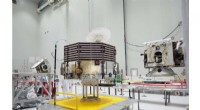
Seismometer stations typically consist of a seismometer, a recording device, and a power supply. The seismometer is usually installed in a vault that is buried underground to protect it from environmental noise. The recording device is used to store the data from the seismometer, and the power supply is used to provide the seismometer with electricity.
Seismometer stations are often part of a network of stations that are used to monitor seismic activity in a particular region. The data from these stations can be used to track the movement of seismic waves, which can provide information about the location and magnitude of earthquakes. Seismometer stations can also be used to study the structure of the Earth's interior by measuring the speed and direction of seismic waves.
Seismometer stations are an important tool for studying earthquakes and the Earth's interior. They provide valuable data that can be used to improve our understanding of these natural phenomena.