Photoelectric Effect: Einstein's explanation of the photoelectric effect, for which he received the Nobel Prize in Physics in 1921, was another groundbreaking contribution to the understanding of light. The effect refers to the emission of electrons from a metal surface when exposed to light. Einstein proposed that light consists of discrete packets of energy, called photons, and that each photon has a specific amount of energy proportional to its frequency. This theory laid the foundation for quantum mechanics and provided a new perspective on the nature of light as both a wave and a particle.
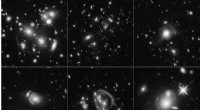
Gravitational Lensing: Einstein's theory of general relativity predicted that the path of light could be bent by the gravitational field of massive objects. This phenomenon, known as gravitational lensing, has been experimentally confirmed and is now widely used in astronomical observations to study distant galaxies and black holes.
Stimulated Emission of Radiation: Einstein's work also provided the theoretical basis for the development of lasers, which rely on the principle of stimulated emission of radiation. Lasers emit highly coherent and intense light, enabling various applications in fields such as medicine, telecommunications, and manufacturing.
Brownian Motion: Einstein's analysis of Brownian motion, the erratic movement of microscopic particles suspended in a fluid, advanced the understanding of statistical mechanics and further solidified the concept of atoms and molecules.
These contributions, along with many others, significantly expanded our knowledge of the nature of light, its interactions with matter, and its profound role in the universe. Einstein's work continues to inspire scientists and researchers in the ongoing exploration and understanding of the fundamental principles governing light and its behavior.