Sample Preparation: The sample of interest, which contains the nuclei with non-zero nuclear quadrupole moments, is carefully prepared. This may involve purifying the sample, grinding it into a fine powder, or placing it in a specific orientation for optimal NQR signal detection.
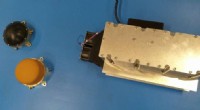
Probe Selection: An NQR probe, which is a specialized radiofrequency (RF) coil designed for NQR experiments, is used. The probe is positioned near the sample to allow for efficient transmission and reception of RF signals.
Frequency Sweep: A frequency sweep is performed by varying the frequency of the RF signal over a predetermined range. This range covers the expected NQR frequencies of the nuclei in the sample.
Signal Detection: As the RF frequency sweeps through the resonance frequencies of the nuclei, they undergo transitions between their energy levels. These transitions result in the absorption or emission of RF energy, which is detected by the NQR probe.
Signal Processing: The detected NQR signals are amplified, filtered, and processed using appropriate electronic circuitry. This step enhances the signal-to-noise ratio and extracts the relevant NQR spectral features.
Data Analysis: The processed NQR spectrum is analyzed to identify the resonance frequencies associated with the different nuclei in the sample. These frequencies are characteristic of the specific isotopes and their environment, providing information about the chemical bonding, molecular structure, and intermolecular interactions within the sample.
Interpretation: The NQR spectrum is interpreted based on the known nuclear quadrupole coupling constants and other relevant parameters. This allows researchers to gain insights into the structural and dynamic properties of the sample at a molecular level.