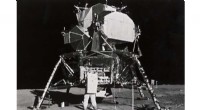
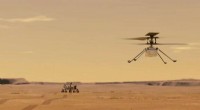
Scientific Investigation: A surface probe would allow scientists to conduct in-depth scientific investigations directly on the planet's surface. It could provide access to untouched samples and data that cannot be obtained remotely or from orbit. Scientific instruments onboard the probe could analyze soil composition, rock formations, atmospheric conditions, seismic activity, magnetic field, and search for signs of past or present life.
Sample Return: A probe designed to return samples from the planet's surface to Earth would be of immense scientific value. These samples could be extensively studied in Earth-based laboratories, allowing scientists to perform detailed analyses and experiments that are not possible with remote sensing or robotic exploration alone.
Technology Development and Testing: A successful mission to the planet's surface would require the development and testing of advanced technologies in areas such as autonomous landing, extreme environment survival, and navigation systems. These technologies would be essential not only for future planetary exploration missions but also for broader applications on Earth and in other space environments.
Resource Utilization: A surface probe could help assess the potential resources available on the planet, including minerals, water ice, and energy sources. This information could inform future missions and planning for potential habitation and resource extraction in the long term.
Public Interest and Inspiration: A mission to the planet's surface would capture public interest and inspire a new generation of explorers and scientists. Space exploration has the power to unite people and foster technological innovation, generating positive impacts beyond scientific research.