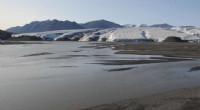
The sun emits light in all colors of the rainbow. When light strikes a surface, some of the light is reflected and some of the light is absorbed. The color of a surface depends on which colors of light are reflected and which colors of light are absorbed.
White surfaces reflect all colors of light, while dark surfaces absorb all colors of light. This is why white surfaces appear bright and dark surfaces appear dim.
The sun's rays are also heating rays. When light is absorbed by a surface, it is converted into heat. This is why dark surfaces feel warmer than white surfaces.
The difference in albedo between white and dark surfaces can have a significant impact on the climate. White surfaces reflect more sunlight back into space, while dark surfaces absorb more sunlight and convert it into heat. This means that areas with a lot of white surfaces are generally cooler than areas with a lot of dark surfaces.
The albedo of a surface can also be affected by its texture. Rough surfaces reflect more light than smooth surfaces. This is because rough surfaces scatter light in all directions, while smooth surfaces reflect light in a more concentrated beam.
The albedo of a surface can also be affected by its surroundings. For example, a white surface surrounded by dark surfaces will appear brighter than a white surface surrounded by white surfaces.
The albedo of a surface is an important factor to consider when designing buildings and other structures. By choosing materials with a high albedo, it is possible to reduce the amount of heat absorbed by a building and make it more energy efficient.