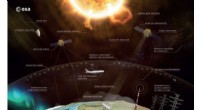
The thinness of the lunar atmosphere means that it provides no significant protection from solar radiation or micrometeoroids. The Moon's surface is therefore bombarded by a constant flux of radiation and particles, which can damage or destroy exposed materials.
The lack of an atmosphere also means that the Moon has no weather. The temperature on the Moon can vary dramatically from about -170 degrees Celsius at night to about 120 degrees Celsius during the day.
The lack of oxygen in the lunar atmosphere also makes it difficult for humans to survive on the Moon. Without a spacesuit, a human would quickly suffocate. Even with a spacesuit, humans would need to be careful to avoid inhaling any of the other gases in the atmosphere, which could be toxic.