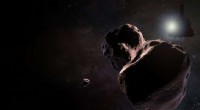
1. Nucleus: The nucleus is the central and solid part of a comet, containing most of its mass. It is composed of:
- Ice: The nucleus is primarily composed of frozen water (H2O) ice.
- Dust: Along with ice, the nucleus contains dust particles, including rocky and organic materials.
- Volatiles: Various volatile substances such as carbon dioxide (CO2), carbon monoxide (CO), methane (CH4), and ammonia (NH3) are present within the nucleus.
2. Coma: As comets approach the Sun and its heat intensifies, the nucleus begins to sublimate, releasing gas and dust. This cloud of gas and dust surrounds the nucleus and is called the coma or cometary atmosphere.
3. Tail: The solar wind, a continuous stream of charged particles from the Sun, interacts with the coma, sweeping away the dust and gas. This results in the formation of two distinct tails:
- Gas Tail (Plasma Tail): This tail is composed of ionized gas from the coma, such as carbon monoxide, hydrogen, and oxygen. It typically stretches millions of kilometers and is always directed away from the Sun due to the solar wind's influence.
- Dust Tail: The dust particles ejected from the nucleus are pushed away by solar radiation, forming a separate tail that trails behind the comet's head. It appears as a diffuse and fan-shaped structure, also directed away from the Sun.
In summary, comets are made up of a combination of ice, dust, and volatile compounds. When they approach the Sun, these components are released and interact with solar radiation and the solar wind, creating the distinctive coma and tails that make comets such captivating celestial phenomena.