Previous research has suggested that the loss of water, along with the development of a thin atmosphere and a cold, dry surface, resulted from a loss of Mars's original atmosphere to space, caused by a strong early sun and a weak Martian magnetic field.
The results of the new research suggest that the loss of water may not have been the direct result of the loss of the atmosphere, and instead may have occurred gradually over time, following the formation of the planet's crust. This model may not require a strong early sun, and explains the cold, dry surface conditions on Mars.
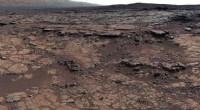
The research, published today in the journal Nature, was led by Francis Nimmo, a professor in the Department of Earth Sciences at the University of California, Santa Cruz. Nimmo and his colleagues used a combination of computer modeling and data from the Mars Curiosity Rover, NASA's Mars Odyssey orbiter, and other Mars missions to develop their model.
"This is really pointing the finger at the formation of the crust as a trigger for Mars losing water," Nimmo said. "It looks like the early crust on Mars was unstable and was recycling material back to the surface. This recycling might have released large amounts of water and hydrogen to the atmosphere, leading to the loss of water and the formation of the cold, dry surface conditions that we see today."
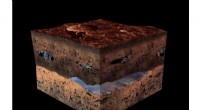
The study suggests that the early crust on Mars was unstable because of its composition and thickness. The crust would have been composed of hydrated minerals, which contain water molecules. When these minerals were exposed to heat from the planet's interior, they would have released water vapor. This water vapor would have been lost to space over time, resulting in the drying out of the planet's surface.
The researchers estimate that the amount of water released by the recycling of the crust could have accounted for a significant amount of the water lost by Mars. They also suggest that this process could have occurred over a long period of time, not necessarily requiring a strong early sun.
The model developed by Nimmo and his colleagues is still under development and will need to be tested further, but it provides a new perspective on the history of Mars and its climate. If the model is correct, it could mean that the loss of water on Mars was a more complex process than previously thought, and may have occurred in stages.
The study builds on previous research done by Nimmo and his colleagues on the evolution of Mars's early crust. Their research suggests that the crust of Mars may have been thicker and formed earlier in the planet's history than previously thought. This could have important implications for understanding how the planet's climate evolved and how water was lost.