Superfluidity is a state of matter in which a fluid flows without any resistance, and it has been previously observed in liquids, such as helium, and in ultracold gases, such as Bose-Einstein condensates. However, superfluidity in light had been predicted theoretically for decades, but it had not been experimentally confirmed.
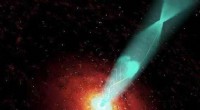
The Trinity College team, led by Professor John Jeffers and Dr. Dara O'Hare, created superfluid light by trapping a beam of laser light inside a microscopic resonator, a tiny cavity made from a semiconductor material. They then used a combination of techniques to cool the light to incredibly low temperatures, close to absolute zero, and to increase its density.
Under these conditions, the light particles, or photons, began to behave like a Bose-Einstein condensate and exhibited superfluidity. The team observed a number of signatures of superfluidity, including the absence of resistance to flow and the formation of vortices, tiny whirlpools of light.
The discovery of superfluid light could have a number of applications. For example, it could be used to create new types of lasers, optical switches and other devices that operate at extremely low temperatures. Superfluid light could also be used to study fundamental physics, such as the behavior of matter at extremely low temperatures and the properties of the vacuum state.
"The demonstration of superfluid light is a major breakthrough in the field of optics and opens up new possibilities for the control and manipulation of light," said Jeffers. "We are excited to explore the potential applications of this discovery in the years to come."