Monitoring and Detection:
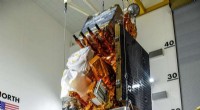
Space agencies like the National Aeronautics and Space Administration (NASA) and the European Space Agency (ESA) operate various observatories and telescopes to continuously scan the skies and identify NEOs. This includes ground-based telescopes, space-based assets, and specialized surveys dedicated to NEO detection.
Impact Risk Assessment:
Once NEOs are detected, astronomers and scientists calculate their orbits, trajectories, and potential impact scenarios. This involves using advanced mathematical models and techniques to assess the probability, timing, and location of an impact.
Mitigation Strategies:
Depending on the size and trajectory of an incoming asteroid, different mitigation strategies may be considered. These strategies can be broadly categorized into two approaches:
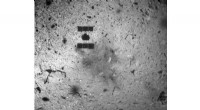
* Deflection or Redirection: This approach aims to alter the trajectory of an asteroid before it collides with Earth. One method involves the kinetic impactor technique, where a spacecraft collides with the asteroid to change its course. Another technique involves using gravity tractors or robotic spacecraft to slowly pull or push an asteroid off its trajectory over time.
* Disruption or Fragmentation: This approach involves breaking up a larger asteroid into smaller fragments that pose less risk to the planet. This can be achieved through nuclear devices, kinetic impactors, or high-energy lasers designed to fragment the asteroid into harmless pieces.
International Collaboration:
Addressing the threat of asteroids is a global endeavor that requires international cooperation and coordination. Several organizations, such as the United Nations Office for Outer Space Affairs (UNOOSA), facilitate international collaboration in monitoring, assessing, and mitigating the impact risks of NEOs. Additionally, international conventions, such as the Convention on International Liability for Damage Caused by Space Objects, provide frameworks for addressing potential liabilities and responsibilities in case of an NEO impact.
Technological Development:
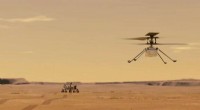
ongoing research and development initiatives aim to advance our capabilities in NEO detection, orbit determination, and mitigation strategies. This includes developing more sensitive telescopes, improved space-based observation systems, and autonomous spacecraft for deflection missions.
Public Awareness and Education:
Raising public awareness about the potential risks and ongoing efforts in NEO monitoring and mitigation is essential. Educational programs and outreach activities help inform masyarakat and stakeholders about the importance of NEO studies and the measures being taken to protect the planet.
It's important to note that the threat of an asteroid impact, while real, is relatively low compared to other natural disasters. Nevertheless, ongoing monitoring and research efforts are crucial for enhancing our preparedness and ensuring the safety of our planet in the long term.