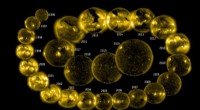
The analysis of the Genesis solar particles has provided scientists with a wealth of information about the Sun. For example, the particles have allowed scientists to determine the composition of the solar wind, which is mostly hydrogen and helium, but also contains trace amounts of other elements, such as oxygen, carbon, and iron. The particles have also allowed scientists to learn more about the Sun's magnetic field, which is responsible for the acceleration and direction of the solar wind.
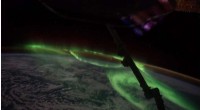
In addition to providing information about the Sun, the Genesis solar particles have also been used to study the effects of space weather on Earth. Space weather is the term used to describe the changes in the Sun's activity and the effects of those changes on Earth. The Genesis solar particles have allowed scientists to study how the solar wind interacts with Earth's magnetic field, and how this interaction can cause geomagnetic storms. Geomagnetic storms can disrupt communications and power systems, and can even pose a hazard to human health.
The Genesis mission was a major success, and the solar wind particles that it collected have provided scientists with a wealth of information about the Sun and its effects on Earth. The mission has also helped to raise awareness of the importance of space weather, and the need to understand and mitigate its effects.