The simulations were conducted by a team of researchers from the University of California, Berkeley, and the University of California, Santa Cruz. They used a powerful computer code to model the growth of galaxies over time, taking into account the effects of gravity, gas dynamics, and the formation of stars and black holes.
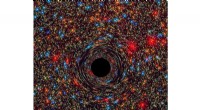
The simulations showed that black holes play a crucial role in regulating the growth of galaxies. As a galaxy grows, it accumulates more gas and dust, which can eventually collapse under its own gravity to form new stars. However, the growth of a galaxy can be limited by the formation of a black hole at its centre.
Black holes can prevent the formation of new stars by emitting powerful jets of gas and radiation. These jets can heat the surrounding gas and make it less dense, so that it is less likely to collapse into stars. In addition, black holes can also draw in gas and dust, which can reduce the amount of material available to form new stars.
The simulations suggest that the growth of black holes is a self-regulating process. As a galaxy grows, the formation of a black hole at its centre eventually limits the growth of the galaxy. This feedback loop helps to explain why some galaxies are much more massive than others.
The simulations also provide new insights into the formation of galaxy clusters. Galaxy clusters are large collections of galaxies that are bound together by gravity. The simulations showed that black holes play a key role in the formation of galaxy clusters by helping to merge smaller galaxies together.
The findings of this study could have implications for our understanding of the evolution of the universe. The growth and regulation of galaxies is a key process in the formation of the universe, and black holes play a crucial role in this process.
In addition to providing new insights into the formation of galaxies and galaxy clusters, the simulations conducted by the team of researchers from Berkeley and Santa Cruz also have implications for the study of black holes themselves. The simulations showed that black holes can grow and evolve over time, and that they can have a significant impact on the surrounding environment. This new understanding of black holes could lead to new discoveries about their role in the universe.