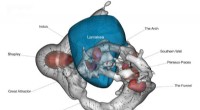
Scientists theorized that the Great Pancake could have been produced by cosmic voids , which are thought to be expanding faster than the surrounding universe.
According to the team of researchers led by Noam Libeskind from the Center for Astrophysics | Harvard & Smithsonian, the filament formed from a vast cosmic void of about 1.8 billion years in diameter. The researchers studied the motion of galaxy clusters on either side of the void to infer properties of the void and predict the distribution of galaxies within it.
Computer simulations revealed that the low-density region could have led to the formation of the observed elongated filament. This solution to the mystery of the Great Pancake could shed light on galaxy evolution within cosmic voids, revealing a new piece of the universe's history.
These findings offer a potential solution to the mystery surrounding the Great Pancake and add to our understanding of the processes shaping our universe.