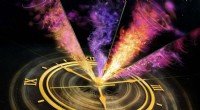
Astrophysical jets are collimated outflows of plasma that are launched from the central regions of accreting objects. They are believed to be powered by the accretion disk, a swirling disk of gas and dust that surrounds the central object. The formation of jets is still not fully understood, but it is thought to involve complex magnetic processes.
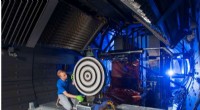
In the experiment, the scientists used a technique called magnetic reconnection to create a small-scale version of an astrophysical jet. Magnetic reconnection is a process in which magnetic field lines break and reconnect, releasing large amounts of energy. In the experiment, magnetic reconnection was triggered by injecting a high-energy electron beam into the plasma.
The experiment showed that magnetic reconnection can indeed lead to the formation of collimated jets. The jets were observed to be highly structured, with a complex internal structure. The scientists also found that the jets were unstable, and underwent a variety of different instabilities. These instabilities are thought to be responsible for the observed variability of astrophysical jets.
The experiment provides new insights into the formation and evolution of astrophysical jets. It shows that magnetic reconnection is a key process in the formation of jets, and that the jets are highly structured and unstable. The results of the experiment will help to improve our understanding of these fascinating phenomena.