• Home
  • Chemistry
  • Astronomy
  • Energy
  • Nature
  • Biology
  • Physics
  • Electronics
  • Galaxy Evolution: Understanding Galactic Change and Mergers
    Galaxies do not follow Darwinian evolution in the same way that biological organisms do. Darwinian evolution describes the process by which species adapt to their environment through natural selection. Galaxies, being non-living entities, do not reproduce or possess genetic variations that can be passed onto future generations.

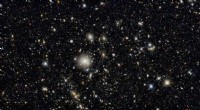
    However, galaxies do undergo changes over time. They can merge with other galaxies, form new stars, and evolve in their morphology. These changes are often driven by gravitational interactions, collisions, and the overall physical processes that govern the Universe. Astronomers study these changes to understand the structure, formation, and evolution of galaxies, but they do not fit within the specific framework of Darwinian evolution.

    Science Discoveries © www.scienceaq.com