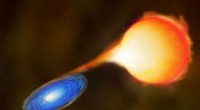
For decades, astronomers have thought that all supernovae are created equal. But new research suggests that there may be two distinct types of supernovae: those that are triggered by the collapse of a massive star, and those that are triggered by the merger of two white dwarfs.
The new study, published in the journal Nature, is based on observations of a supernova that occurred in a nearby galaxy in 2019. The supernova, known as SN 2019ehk, was unlike any other supernova that astronomers had ever seen before.
SN 2019ehk was much brighter than a typical supernova, and it also emitted a very unusual type of light. The researchers believe that these unusual features are due to the fact that SN 2019ehk was triggered by the merger of two white dwarfs.
If the researchers are correct, then it means that there may be two distinct types of supernovae: those that are triggered by the collapse of a massive star, and those that are triggered by the merger of two white dwarfs. This discovery could have major implications for our understanding of the universe.
Supernovae are one of the most powerful explosions in the universe. They occur when a massive star reaches the end of its life and explodes, sending debris hurtling through space. Supernovae are thought to be responsible for creating the heavy elements that make up the universe, including the elements that make up life.
If there are two distinct types of supernovae, then it means that there may be two distinct ways that the heavy elements are created. This could have a major impact on our understanding of how the universe formed and evolved.
The new research is just the beginning. More observations are needed to confirm the existence of two distinct types of supernovae. But if the researchers are correct, then it could change our understanding of the universe forever.