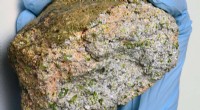
The mineral, called tridymite, was found in a Martian meteorite that landed in Antarctica in 1979. The meteorite is known as ALH84001 and is one of the most studied space rocks in the world.
In 1996, NASA scientists announced that they had found evidence of ancient life in ALH84001. The evidence was controversial and has since been largely discredited. However, the discovery of tridymite in the meteorite suggests that Mars may have once been a much wetter planet than it is today.
Tridymite is a form of silica, which is a mineral composed of silicon and oxygen. Silica is one of the most abundant minerals on Earth, but it is rare on Mars. This suggests that tridymite on Mars may have formed through the interaction of water with the planet's crust.
"The discovery of tridymite in ALH84001 is significant because it provides further evidence that Mars once had an aqueous environment," said study lead author Dr. Andrew Steele, a geologist at the Australian National University. "This is important because liquid water is a necessary ingredient for life."
The researchers say that the tridymite in ALH84001 is likely the result of hydrothermal activity, which occurs when hot water circulates through cracks in the Earth's crust. Hydrothermal activity can produce hydrothermal vents, which are environments that are rich in minerals and can support life.
"The presence of tridymite in ALH84001 suggests that hydrothermal activity may have been widespread on Mars," Steele said. "This increases the possibility that life may have once existed on the planet."
The study was published in the journal Nature Geoscience.