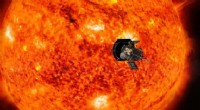
Here's a general explanation of how space eruptions happen:
1. Magnetic Field Build-Up: The sun's magnetic field is constantly changing due to the movement of plasma in the convection zone. As plasma moves, it creates electric currents that generate magnetic fields. These magnetic fields can become twisted and tangled, storing a large amount of energy.
2. Magnetic Reconnection: In certain regions of the sun, particularly in areas where the magnetic field is particularly strong, the twisted field lines can snap and reconnect, releasing the stored magnetic energy. This process is known as magnetic reconnection.
3. Energy Release: When magnetic reconnection occurs, a tremendous amount of energy is released in the form of intense heat and radiation. This energy can travel through the sun's atmosphere, creating bright flashes known as solar flares.
4. Coronal Mass Ejection: In some cases, the released energy can also cause a coronal mass ejection (CME) to erupt from the sun's corona. A CME is a large cloud of plasma and magnetic field that can travel through space at speeds ranging from a few hundred kilometers per second to several thousand kilometers per second.
5. Solar Wind and Geomagnetic Storms: The sun continuously emits a stream of charged particles known as the solar wind. During space eruptions, the energy released can cause the solar wind to become more intense and disturbed. This can lead to geomagnetic storms when the solar wind interacts with the Earth's magnetic field, causing disruptions in satellite communications, power grids, and other technological systems.
It's important to note that space eruptions can vary in intensity and frequency. Some can be relatively minor, while others can be more significant, causing noticeable effects on Earth. Scientists continuously monitor solar activity to understand and predict the occurrence of these events and mitigate their potential impacts on our planet and technology.