The finding, published in the Astrophysical Journal Letters, provides insights into the early stages of planet formation, which still remains an active area of research.
"This disk looks to still have a lot of gas and dust at the center," said lead author Sarah Sadavoy, a NASA Postdoctoral Fellow at the Institute for Astronomy. "This material could be used to form planets in the future."
Protoplanetary disks are swirling clouds of gas and dust that surround young stars. It's in this material that planets are thought to form. However, it can be difficult to observe these disks because they're often very small and faint compared to the central star.
In this case, the researchers were able to indirectly detect the disk by observing the star's light that was reflected by the disk's dust. The team observed the disk using the James Clerk Maxwell Telescope in Hawaii and the Atacama Large Millimeter/submillimeter Array in Chile.
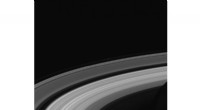
The team's observations showed that the disk is relatively large, with a radius of about 140 astronomical units (AU). One astronomical unit is the distance from Earth to the Sun. The disk also appears to be very clumpy, with several dense rings of material.
The team believes that the disk's gravitational instability is due to a combination of factors, including the disk's mass, size, and temperature. The disk's mass is thought to be about 10 times the mass of Jupiter, which is very high compared to most protoplanetary disks. The disk is also very large, which means that it has a lot of material to work with. Finally, the disk is relatively cold, which means that it's more likely to fragment and form clumps.
The team hopes that future observations will help them to better understand the planet formation process. They are particularly interested in learning more about the clumps of material within the disk and how these clumps might evolve into planets.