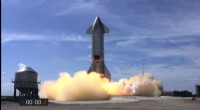
1. Increased commercialization: In recent years, there has been a surge in private space companies, such as SpaceX, Blue Origin, and Virgin Galactic, entering the space industry. This has led to a shift towards commercial space activities, including satellite launches, astronaut transportation, and space tourism. While government agencies still play a crucial role, the rise of private companies has expanded the scope of space exploration and made it more accessible to non-governmental entities.
2. Focus on sustainability: As space exploration advances, there is a growing emphasis on sustainability and responsible practices. Space agencies and companies are striving to minimize the environmental impact of their activities, including reducing debris in space, promoting responsible resource utilization, and ensuring the long-term viability of space exploration for future generations.
3. International collaboration: Space exploration has become increasingly international in nature, with multiple nations and space agencies collaborating on projects. The International Space Station (ISS) is a prime example of this, involving cooperation between the United States, Russia, and other countries. International partnerships not only pool resources and expertise but also foster scientific and technological advancements that benefit all involved parties.
4. New frontiers: While the traditional focus of space exploration has been on Earth's immediate neighborhood, such as the moon and Mars, there is now a growing interest in exploring the outer planets, asteroids, comets, and even exoplanets. Missions like the Juno probe to Jupiter, the Cassini-Huygens mission to Saturn, and the New Horizons probe to Pluto have expanded our understanding of the solar system and continue to reveal fascinating discoveries.
5. Public engagement: Space exploration has become more accessible and engaging to the general public through live broadcasts, social media updates, and educational initiatives. Advances in technology, such as high-resolution imagery, virtual reality, and interactive experiences, have allowed people around the world to feel closer to space and its wonders.
In conclusion, while the final frontier of space still holds immense potential and fascination, it has undergone significant changes in recent years. The increased involvement of private companies, emphasis on sustainability, international collaboration, exploration of new frontiers, and public engagement have shaped the modern landscape of space exploration.