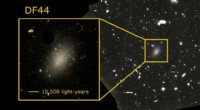
One key factor behind the disappearance of dwarf galaxies is the process of tidal stripping. As dwarf galaxies orbit larger galaxies, they experience gravitational interactions that can pull away their stars, gas, and dark matter. This gradual stripping can lead to a significant reduction in the galaxy's overall brightness, making it difficult to detect with telescopes.
Galactic winds, powerful outflows of gas and dust driven by star formation or active galactic nuclei (AGN), can further contribute to the dimming of dwarf galaxies. These winds can expel vast amounts of material from the galaxy, stripping away its luminous components and leaving behind a remnant that is challenging to observe.
Another mechanism contributing to the invisibility of dwarf galaxies is the quenching of star formation. Star formation is a crucial process that gives galaxies their brilliance. However, in certain environments, such as interactions with larger galaxies or changes in the surrounding gas supply, star formation can be suppressed. Without the continuous injection of new stars, the galaxy's light output diminishes, leading to its potential "disappearance."
The implications of dwarf galaxies losing their light are profound. It suggests that our current understanding of the abundance and distribution of galaxies in the universe may be incomplete. The existence of "missing" dwarf galaxies that have faded into obscurity could challenge theories of galaxy formation and evolution, requiring astronomers to reevaluate how these systems originate and interact.
Furthermore, the study of invisible dwarf galaxies provides valuable insights into the dynamics and interactions that shape the cosmos. By exploring the mechanisms behind their disappearance, astronomers gain a deeper understanding of the complexities of galactic environments, the processes that drive galaxy transformation, and the role of dark matter in shaping the fabric of the universe.
As we peer deeper into the cosmos and continue to unravel the mysteries of galaxy evolution, the once-invisible dwarf galaxies are emerging from the shadows, offering a new perspective on the vastness and diversity of the universe.