1. Climate and Weather Predictions: The Sun's irradiance is a crucial factor in understanding and predicting Earth's climate and weather patterns. Variations in solar irradiance can influence global temperatures, sea levels, precipitation, and the frequency and intensity of extreme weather events. By monitoring solar irradiance, scientists can better understand and predict long-term climate trends and short-term weather fluctuations.
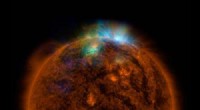
2. Space Weather Monitoring: The Sun is the primary driver of space weather, which refers to the conditions and disturbances in Earth's magnetosphere, ionosphere, and upper atmosphere caused by solar activity. Solar irradiance plays a significant role in space weather events such as solar flares, coronal mass ejections (CMEs), and geomagnetic storms. NASA's monitoring of solar irradiance helps in forecasting and mitigating the impacts of space weather on satellite operations, power grids, communication systems, and other technological infrastructure on Earth.
3. Solar System Exploration: Understanding solar irradiance is essential for planning and conducting missions to explore the solar system. Spacecraft venturing beyond Earth's protective magnetic field, such as those traveling to Mars or the outer planets, must be designed and equipped to withstand the intense radiation and energy from the Sun. Accurate measurements of solar irradiance aid in developing appropriate shielding and power systems for these missions.
4. Astrophysics Research: Studying solar irradiance contributes to our understanding of the Sun's behavior, its internal processes, and its interactions with other celestial objects. Scientists can investigate solar cycles, sunspot activity, and the Sun's magnetic fields by monitoring irradiance variations. This knowledge helps advance our understanding of stellar physics and the complexities of the Sun as a star.
5. Technological Advancements: Monitoring solar irradiance supports the development and testing of new technologies related to solar energy, space exploration, and climate research. Accurate measurements of solar irradiance enable the design of efficient solar panels, evaluate the performance of space-based instruments, and validate climate models.
Overall, NASA's monitoring of solar irradiance plays a vital role in ensuring the safety and success of space missions, improving our understanding of Earth's climate and space weather, and advancing scientific knowledge about the Sun and its influence on our planet.