They found that the star was destroyed through a process called tidal disruption events (TDE), which occur when a star strays too close to a black hole and gets torn apart by the black hole's immense gravitational pull. The resulting debris can create powerful jets and X-ray emissions, which can be observed from Earth.
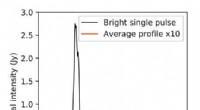
The researchers were able to observe multiple flare-ups of light emanating from the disrupted star, suggesting that its destruction occurred in multiple phases or stages rather than a single, swift event.
The event sheds light on the extreme environments near supermassive black holes and the processes by which these massive cosmic objects devour matter, providing valuable insights into the growth and evolution of galaxies.