1. Gas Accretion: Supermassive black holes are believed to grow by accreting gas from their surroundings. As gas falls towards the black hole, it forms an accretion disk, which is a swirling disk of material orbiting around the black hole. The gravitational forces within the accretion disk generate enormous amounts of heat and friction, releasing large amounts of radiation, including X-rays and gamma rays. This process is often referred to as "active galactic nuclei" (AGN) or "quasars" when the emission is particularly bright.
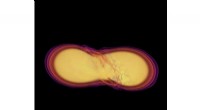
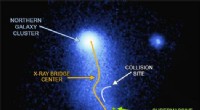
2. Galaxy Mergers and Interactions: Galaxy mergers and interactions can play a significant role in triggering the activation of supermassive black holes. When two or more galaxies collide or interact, the gravitational disturbances and inflows of gas can cause the central black holes to grow rapidly by accreting the available gas. The merging of galaxies can lead to the formation of massive galaxies with supermassive black holes at their centers.
3. Instabilities in Galactic Disks: Internal instabilities within a galaxy's disk, such as the presence of spiral arms or bars, can lead to the accumulation of gas in the central regions. This gas can then fuel the growth of the central black hole through accretion.
4. Tidal Disruption Events: In some cases, supermassive black holes can be activated through tidal disruption events. When a star passes too close to a black hole, the immense gravitational forces of the black hole can tear the star apart, causing a significant amount of gas to be released. This influx of gas can lead to a temporary outburst of activity in the black hole, known as a tidal disruption event.
5. Feedback Mechanisms: Supermassive black holes can also self-regulate their growth through various feedback mechanisms. As the black hole accretes gas and becomes more active, it emits powerful jets of matter and radiation. These jets can heat and expel the surrounding gas, which can temporarily quench the black hole's growth. This interplay between accretion and feedback mechanisms can lead to periods of activity and quiescence in the life of a supermassive black hole.
Overall, the activation of a supermassive black hole involves the accumulation and accretion of gas, often triggered by mechanisms such as galaxy mergers, instabilities, and tidal disruptions. These processes lead to the growth of the black hole and the release of enormous amounts of energy in various forms, including radiation, jets, and outflows.