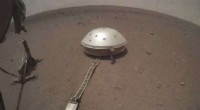
NASA's Mars Exploration Program (MEP) is a long-term effort to explore the Red Planet and understand its history, geology, climate, and potential for past or present life. MEP has sent a series of robotic spacecraft to Mars, including the Mars Reconnaissance Orbiter (MRO), the Curiosity rover, and the InSight lander. In 2023, NASA will launch two new Mars missions: the Mars Sample Return mission and the Europa Clipper mission.
The Mars Sample Return Mission
The Mars Sample Return mission is a joint effort between NASA and the European Space Agency (ESA) to collect and return samples of Martian rocks and soil to Earth for further analysis. The mission will consist of two spacecraft: a lander that will collect the samples and a return orbiter that will carry the samples back to Earth. The Mars Sample Return mission is expected to launch in 2023 and return the samples to Earth in 2033.
The Europa Clipper Mission
The Europa Clipper mission is a NASA mission to explore Jupiter's moon Europa, which is thought to have a subsurface ocean that may be habitable for life. The mission will investigate Europa's surface, interior, and atmosphere, and search for evidence of past or present life. The Europa Clipper mission is expected to launch in 2023 and arrive at Europa in 2030.
How These Missions Will Help Us Understand How Mars Turned Hostile
The Mars Sample Return mission and the Europa Clipper mission will provide scientists with valuable information about Mars and Europa's history, geology, climate, and potential for past or present life. This information will help us understand how Mars turned hostile and whether it was ever habitable for life.
Mars Sample Return Mission
The Mars Sample Return mission will collect and return samples of Martian rocks and soil to Earth for further analysis. These samples will be analyzed by scientists using a variety of techniques to determine their composition, age, and history. The samples will also be searched for evidence of past or present life, such as fossils or organic molecules.
Europa Clipper Mission
The Europa Clipper mission will investigate Europa's surface, interior, and atmosphere, and search for evidence of past or present life. The mission will use a variety of instruments to study Europa's surface, including a radar instrument that can penetrate through the ice and into the subsurface ocean. The mission will also study Europa's magnetic field and atmosphere, which can provide clues about the presence of liquid water beneath the surface.
The Future of Mars Exploration
The Mars Sample Return mission and the Europa Clipper mission are just two of the many missions that NASA is planning to send to Mars and Europa in the coming years. These missions will help us to understand the history, geology, climate, and potential for past or present life on these two planets. They will also pave the way for future human missions to Mars and Europa.