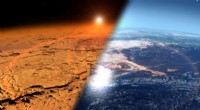
For example, Venus is much hotter than Earth, with a surface temperature of about 462 °C (863 °F). This is because Venus has a much denser atmosphere, which traps heat and makes the planet a greenhouse. In contrast, Earth's atmosphere is much thinner and allows heat to escape, which keeps the planet cooler.
Venus also has a very different atmosphere composition than Earth. Earth's atmosphere is mostly nitrogen and oxygen, while Venus' atmosphere is mostly carbon dioxide. This difference in atmospheric composition has a big impact on the climate and surface conditions of the two planets.
Finally, Venus has a much slower rotation rate than Earth. Earth completes a full rotation every 24 hours, while Venus takes about 243 Earth days to rotate once. This means that a day on Venus is much longer than a day on Earth.
All of these differences between Venus and Earth make them very different planets, despite their similar size, mass, and density.