A team of astronomers from Japan, the United States, and Australia observed the infant galaxy, known as GN-z11, with the Subaru telescope on Mauna Kea.
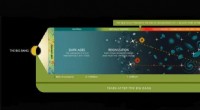
Scientists believe that the universe was created in the Big Bang, some 13.8 billion years ago, and that galaxies slowly coalesced over billions of years.
If the findings on GN-z11 are confirmed, it would suggest that this galaxy formed just 400 million years after the Big Bang.
The astronomers reported their discovery in a paper released on Wednesday in the journal Nature.
"GN-z11 offers a direct look into the first billion years of cosmic history, an era that until now has been largely unexplored," said Pascal Oesch from the University of Geneva in Switzerland, the lead author on the study.
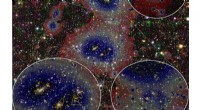
The detection of GN-z11 was made possible by the Subaru Telescope's Hyper Suprime-Cam (HSC), which captures extremely high-resolution images.
The team then confirmed their finding by using the Atacama Large Millimeter/submillimeter Array (ALMA) in Chile, which probes light from cold interstellar gas.
Despite the excitement surrounding the discovery, the authors said that more observations and analysis would be needed to confirm GN-z11 as a genuine high-redshift galaxy.