Mars's smaller size means that it has less gravity than Earth. This means that the Martian atmosphere is more easily lost to space through processes such as thermal escape and sputtering.
Mars's lower gravity also means that the planet's atmosphere is less dense than Earth's. This makes it more susceptible to being stripped away by the solar wind.
Mars's greater distance from the Sun means that it receives less heat from the Sun than Earth. This cooler environment causes the Martian atmosphere to condense more easily, which leads to precipitation and the formation of clouds.
All of these factors contribute to the Martian atmosphere's thinness. While the Martian atmosphere is much thinner than Earth's, it is still sufficient to support life. There is evidence to suggest that Mars once had a much thicker atmosphere, and that this atmosphere may have supported liquid water on the planet's surface. If this is true, then it is possible that life could have arisen on Mars in the past.
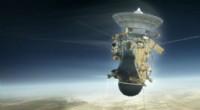
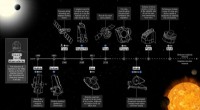
The NASA mission "Mars Atmosphere and Volatile EvolutioN" (MAVEN) is designed to study the Martian atmosphere and determine how it has evolved over time. MAVEN will measure the composition, structure, and circulation of the Martian atmosphere, and will investigate the processes that are responsible for its loss. The data from MAVEN will help scientists to better understand the past, present, and future of the Martian atmosphere and its potential for supporting life.