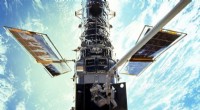
The Kepler space telescope, launched in 2009, was a revolutionary mission that discovered thousands of exoplanets, including many that could potentially support life. However, the spacecraft suffered a major failure in 2013 when two of its four reaction wheels failed, rendering it unable to point accurately enough to continue its mission.
Despite the setback, NASA is considering a number of options to revive the Kepler space telescope. One option is to use a technique called "two-wheeling," which would involve using the two remaining reaction wheels to control the spacecraft's pointing. This technique has been used successfully on other spacecraft, but it would require some modifications to the Kepler spacecraft.
Another option is to use a small spacecraft to rendezvous with Kepler and repair the failed reaction wheels. This would be a more complex and expensive option, but it would allow Kepler to resume its original mission.
Finally, NASA could also decide to repurpose the Kepler spacecraft for a different mission. For example, the spacecraft could be used to study the atmospheres of exoplanets or to search for comets and asteroids.
The decision of which option to pursue will depend on a number of factors, including the cost, the technical feasibility, and the scientific value of the proposed mission. NASA is expected to make a decision in the coming months.
Two-Wheeling
Two-wheeling is a technique that involves using two reaction wheels to control the spacecraft's pointing. This technique has been used successfully on other spacecraft, but it would require some modifications to the Kepler spacecraft.
The modifications that would be required include:
* Adding a new set of sensors to measure the spacecraft's rotation.
* Developing new software to control the reaction wheels.
* Testing the new system to ensure that it works properly.
If the two-wheeling technique is successful, it would allow Kepler to resume its original mission of searching for exoplanets.
Rendezvous Mission
A rendezvous mission would involve sending a small spacecraft to meet up with Kepler and repair the failed reaction wheels. This would be a more complex and expensive option than two-wheeling, but it would allow Kepler to resume its original mission.
The rendezvous mission would require the following steps:
* Designing and building a small spacecraft.
* Launching the spacecraft into orbit.
* Navigating the spacecraft to Kepler.
* Rendezvousing with Kepler.
* Repairing the failed reaction wheels.
The rendezvous mission would be a challenging endeavor, but it would be a major step forward in the search for exoplanets.
Repurposing Kepler
If NASA decides not to revive Kepler for its original mission, it could repurpose the spacecraft for a different mission. For example, the spacecraft could be used to:
* Study the atmospheres of exoplanets.
* Search for comets and asteroids.
* Observe the sun.
Repurposing Kepler would allow NASA to continue to use the spacecraft's valuable resources, even though it cannot continue its original mission.
The Decision
The decision of which option to pursue will depend on a number of factors, including the cost, the technical feasibility, and the scientific value of the proposed mission. NASA is expected to make a decision in the coming months.