The search for water on Mars is a top priority for scientists and astronauts alike. Water is essential for life, and it would be a valuable resource for future human missions to the Red Planet.
Recent research has shown that the Martian soil is surprisingly diverse, and it contains a variety of minerals that could potentially hold water. However, it is still unclear how much water is actually available in the Martian soil, and how easy it would be to extract.
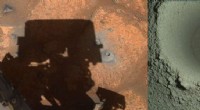
One of the most promising sources of water on Mars is the regolith, which is a layer of loose soil and rock that covers the surface of the planet. The regolith contains a variety of minerals that can hold water, such as clay minerals and hydrated salts.
Scientists have estimated that the regolith could contain as much as 1% water by weight. This may not seem like a lot, but it would be enough to provide water for a human mission to Mars.
However, it is important to note that the water in the regolith is not evenly distributed. Some areas of the regolith may contain more water than others, and it may be difficult to find the areas with the highest water content.
Another challenge is that the water in the regolith is not always easy to extract. The minerals that hold water in the regolith are often very fine-grained, and they can be difficult to separate from the rest of the soil.
Despite these challenges, scientists are optimistic that the regolith could be a valuable source of water for future Mars missions. They are currently working on developing new technologies that will make it easier to extract water from the regolith.
If scientists are able to successfully extract water from the regolith, it would be a major breakthrough for future Mars missions. Water would be a valuable resource for astronauts, and it would also be used to produce rocket fuel.
The ability to extract water from the Martian regolith would make it much more feasible to send humans to Mars. It would also open up the possibility of long-term human settlements on the Red Planet.
Conclusion
The search for water on Mars is a critical step in preparing for future human missions to the Red Planet. The Martian soil is surprisingly diverse, and it contains a variety of minerals that could potentially hold water. However, it is still unclear how much water is actually available in the Martian soil, and how easy it would be to extract.
Scientists are currently working on developing new technologies that will make it easier to extract water from the regolith. If they are successful, it would be a major breakthrough for future Mars missions and would open up the possibility of long-term human settlements on the Red Planet.