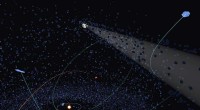
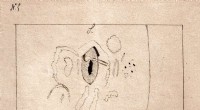
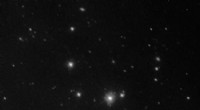
Using the Hubble Space Telescope and the Spitzer Space Telescope, astronomers will attempt to detect any debris left behind by ISON as it passed within 730,000 miles of the sun's surface. They are particularly interested in finding any fragments that may have survived the intense heat and radiation of the solar corona.
The search for ISON's remains is important because comets are considered to be primitive building blocks of the solar system. By studying the composition and structure of ISON, scientists hope to learn more about the early history of the solar system and the formation of planets and moons.
Comets are made up of ice and dust, and they originate from the Kuiper Belt and Oort Cloud, two regions beyond the orbit of Neptune. When a comet approaches the sun, the heat from the sun causes the ice to vaporize and the dust to be blown away from the nucleus, creating a tail.
ISON was discovered in 2012 and was expected to be one of the brightest comets visible in the night sky in decades. However, as it approached the sun, it began to disintegrate, and it is now believed that it has completely broken up.
The search for ISON's remains is a challenging task, but it is an important one. By studying the comet's remains, scientists hope to learn more about the history of the solar system and the nature of comets.