1. Albedo Effect: Dust particles in the atmosphere can reflect incoming solar radiation back into space, increasing the planet's overall albedo (reflectivity). This can lead to a cooling effect, especially over snow and ice-covered regions, as more solar energy is reflected away. Reduced ice and snow cover can then lead to further warming and changes in local weather patterns.
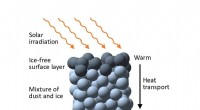
2. Absorption and Re-emission of Heat: Dust particles can also absorb solar radiation and re-emit it as thermal radiation at longer wavelengths, contributing to atmospheric warming. This effect can be particularly pronounced in the polar regions during spring and summer when the sun is low on the horizon and its energy is more likely to be absorbed by suspended dust particles.
3. Impact on Cloud Formation and Properties: Dust particles can influence cloud formation and cloud properties, including cloud droplet size, cloud cover, and cloud lifetime. The presence of dust can alter cloud microphysics, leading to changes in precipitation patterns and the overall energy balance of the atmosphere.
4. Changes in Surface Energy Budget: Dust deposited on snow and ice surfaces can reduce their reflectivity, leading to increased absorption of solar energy. This can accelerate melting and contribute to the loss of ice during the polar summer. Additionally, dust deposited on sea ice can reduce its insulating properties, causing more heat to be transferred from the ocean to the atmosphere.
5. Biogeochemical Effects: Dust can contain nutrients, such as iron, nitrogen, and phosphorus, which are important for plant growth. When deposited in polar environments, dust can stimulate biological productivity, particularly in nutrient-limited regions like the Arctic. Changes in vegetation can further influence regional climate and ecosystems.
It's important to note that the effects of dust on Earth's rapidly warming poles can be complex and interconnected. Understanding these effects requires a comprehensive study of atmospheric processes, surface interactions, and climate dynamics in polar regions.