Aerosols are tiny particles that are suspended in the atmosphere. They can come from a variety of sources, including natural sources such as volcanoes and forest fires, and human-made sources such as industrial emissions and vehicle exhaust. Aerosols can have a significant impact on the climate, as they can reflect sunlight back into space, leading to cooling, or absorb sunlight, leading to warming. They can also affect cloud formation and precipitation.
The growth of aerosol particles in the atmosphere is a complex process that is influenced by a number of factors, including the type of aerosol, the size of the aerosol, the temperature and humidity of the atmosphere, and the presence of other pollutants.
Theory models can help us to understand the growth of aerosol particles in the atmosphere. These models can simulate the physical and chemical processes that occur in the atmosphere, and they can be used to predict how aerosol particles will grow over time.
One type of theory model that is commonly used to study aerosol growth is the sectional model. Sectional models divide the aerosol population into a number of sections, each of which represents a different size range of aerosols. The model then tracks the growth of each section over time, taking into account the various processes that can affect growth.
Another type of theory model that is sometimes used to study aerosol growth is the moment model. Moment models represent the aerosol population as a series of moments, which are statistical measures of the population. The model then tracks the evolution of the moments over time, taking into account the various processes that can affect growth.
The Environmental Molecular Sciences Laboratory (EMSL) is a national user facility that provides researchers with access to a wide range of state-of-the-art instrumentation and expertise. EMSL's capabilities can be used to study the growth of aerosol particles in the atmosphere in a number of ways.
Aerosol measurements
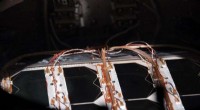
EMSL's Aerosol Measurement Laboratory is equipped with a variety of instruments that can be used to measure the size, shape, and composition of aerosol particles. These instruments can be used to measure aerosols in a variety of environments, including ambient air, indoor air, and process emissions.
Aerosol simulation chambers
EMSL's Aerosol Simulation Chambers are large, controlled environments that can be used to simulate the conditions in the atmosphere. These chambers can be used to study the growth of aerosol particles under a variety of conditions, including different temperatures, humidities, and pollutant concentrations.
Computational modeling
EMSL's Computational Modeling Group can provide researchers with access to a variety of computational resources, including high-performance computers and software. These resources can be used to run theory models that simulate the growth of aerosol particles in the atmosphere.
The growth of aerosol particles in the atmosphere is a complex process that is influenced by a number of factors. Theory models and EMSL's capabilities can help us to understand this process and to predict how aerosol particles will grow over time. This information is essential for developing strategies to mitigate the impacts of aerosols on the climate and human health.