1. Cosmic Pioneers:
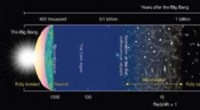
When the universe was only about a billion years old, it was shrouded in darkness. The first stars and galaxies had begun to form, but their light had yet to spread and fill the vast expanse of space. It was in this primordial era that the faintest galaxies emerged, acting as cosmic pioneers.
2. Population Boom:
These tiny galaxies were astonishingly abundant, outnumbering their larger siblings by a significant margin. Their sheer numbers allowed them to collectively shed light on the universe, gradually dispersing the veil of darkness.
3. Prolific Light Emitters:
Despite their diminutive size, these faint galaxies were remarkable light emitters. They radiated copious amounts of ultraviolet light, which traveled across cosmic distances and ionized the hydrogen atoms that filled the intergalactic medium.
4. Cosmic Reionization:
The ultraviolet radiation emitted by the faint galaxies led to a momentous event known as cosmic reionization. This process stripped the electrons off hydrogen atoms, transforming the opaque hydrogen-rich fog into a transparent medium. As a result, light could finally travel freely, allowing the cosmos to become visible.
5. Cosmic Evolution:
The illumination caused by the faint galaxies had profound implications for the evolution of the universe. It created the necessary conditions for subsequent generations of stars and galaxies to form, paving the way for the universe to transform from a dark canvas into a tapestry of luminous celestial objects.
6. Observational Challenges:
Detecting these faint galaxies is an exceedingly challenging task for telescopes, as their light is incredibly feeble and easily overwhelmed by the glare of brighter celestial objects. However, advancements in observational techniques and the use of powerful telescopes, such as the Hubble Space Telescope, have enabled astronomers to glimpse these cosmic gems.
7. Window to the Past:
Studying these faint galaxies provides astronomers with a unique opportunity to peer into the distant past of the universe and gain insights into the early stages of its formation and evolution. They serve as remnants of the universe's infancy, containing valuable clues about the conditions that existed billions of years ago.
In conclusion, the faintest galaxies, though minuscule in size, were pivotal in illuminating the early universe. Their remarkable abundance, light-emitting prowess, and role in cosmic reionization transformed the cosmos from a murky obscurity to a luminous expanse, setting the stage for the grand spectacle of the universe as we know it today.