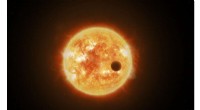
OCO-3 is also expected to provide insights into the atmospheres of other planets, including exoplanets. By studying the carbon dioxide levels in these planets' atmospheres, scientists can learn more about their climate and habitability.
Here are some of the ways that OCO-3 will help us understand alien worlds:
* It will help us identify potentially habitable planets. Carbon dioxide is a greenhouse gas, which means that it traps heat in the atmosphere. This makes it an important factor in a planet's climate. By measuring the carbon dioxide levels in an exoplanet's atmosphere, scientists can get a better idea of its temperature and whether it could potentially support life.
* It will help us understand the evolution of planetary atmospheres. The carbon cycle is a complex process that involves the exchange of carbon between the atmosphere, land, and oceans. By studying the carbon cycle on Earth, scientists can learn more about how planetary atmospheres evolve over time. This information can then be used to understand the atmospheres of other planets, including exoplanets.
* It will help us search for signs of life on other planets. The presence of carbon dioxide in an exoplanet's atmosphere could be a sign of life. This is because carbon dioxide is produced by living organisms, and it is also a necessary ingredient for photosynthesis. By measuring the carbon dioxide levels in an exoplanet's atmosphere, scientists can search for signs of life on other planets.
OCO-3 is a powerful tool that will help us understand the carbon cycle on Earth and other planets. This information will be essential for identifying potentially habitable planets and searching for signs of life on other worlds.
Here are some specific examples of how OCO-3 data has been used to study exoplanets:
* In 2019, OCO-3 data was used to study the atmosphere of the exoplanet HD 189733b. This planet is located about 63 light-years from Earth, and it is one of the most well-studied exoplanets. OCO-3 data revealed that HD 189733b has a high level of carbon dioxide in its atmosphere. This suggests that the planet may have a warm climate, and it could potentially support life.
* In 2020, OCO-3 data was used to study the atmosphere of the exoplanet TRAPPIST-1e. This planet is located about 40 light-years from Earth, and it is one of seven planets that orbit a red dwarf star. OCO-3 data revealed that TRAPPIST-1e has a moderate level of carbon dioxide in its atmosphere. This suggests that the planet may have a temperate climate, and it could potentially support life.
These are just a few examples of how OCO-3 data is being used to study exoplanets. As OCO-3 continues to collect data, we will learn more about the atmospheres of other planets and our place in the universe.