Amid the vast expanse of space, understanding the concept of "up" and "down" becomes a unique challenge for astronauts. Without the familiarity of Earth's gravitational pull to provide a constant reference, astronauts must rely on alternative cues to maintain their orientation in the microgravity environment. A team of researchers is currently investigating how astronauts process different gravitational cues and the implications of long-term exposure to microgravity on their perception of "up."
The human brain relies on various sensory inputs, including visual cues, proprioception, and vestibular signals, to determine spatial orientation. On Earth, gravity provides a constant gravitational vector, allowing the brain to establish a stable frame of reference. However, in space, the lack of gravity disrupts this gravitational reference, leading to a phenomenon known as "sensory conflict."
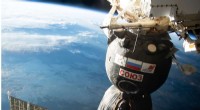
To combat sensory conflict, astronauts rely on alternative cues such as visual landmarks inside spacecraft, the direction of spacecraft movement, and even the pull of the sun or Earth's magnetic field. They undergo rigorous training to adapt to the altered sensory environment and develop strategies for maintaining spatial orientation.
The team of researchers, led by scientists at the European Space Agency (ESA) and the Massachusetts Institute of Technology (MIT), is conducting experiments to monitor how astronauts' brains adapt to microgravity. They utilize functional magnetic resonance imaging (fMRI) scans and behavioral assessments to study the neural mechanisms involved in spatial orientation and decision-making in space.
One key aspect of the research focuses on understanding how astronauts' internal representation of "up" changes over time in microgravity. The researchers are investigating whether the brain can redefine "up" based on the available gravitational cues, such as the direction of spacecraft acceleration or the pull of the sun. This adaptation process could have implications for long-duration space missions and potential future settlements on other planets with different gravitational environments.
The study also aims to assess the impact of microgravity on astronauts' cognitive performance and decision-making abilities. Prolonged exposure to microgravity has been known to affect cognitive functions, including attention, memory, and spatial processing. By studying these effects, the researchers hope to develop countermeasures to mitigate these impairments and ensure astronaut safety during extended missions.
In conclusion, the team's research provides valuable insights into how astronauts determine "up" in space and how their brains adapt to the unique challenges of microgravity. Their findings have implications for human space exploration, aiding in the design of future spacecraft, training programs, and interventions to mitigate the effects of microgravity on astronaut performance.