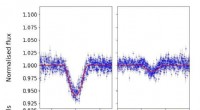
1. TESS (Transiting Exoplanet Survey Satellite): Launched in 2018, TESS is designed to survey a large area of the sky to search for transiting exoplanets. TESS monitors bright, nearby stars and searches for periodic dips in their brightness, which could indicate the presence of an exoplanet passing in front of the star.
2. JWST (James Webb Space Telescope): Scheduled for launch in late 2021, the James Webb Space Telescope will have infrared capabilities that enable it to study the atmospheres of exoplanets, providing valuable insights into their composition, temperature, and potential habitability.
3. PLATO (PLAnetary Transits and Oscillations of stars): PLATO is a European Space Agency mission planned for launch in 2026. It will focus on detecting and characterizing exoplanets using the transit method, with a primary objective to find and study Earth-like planets in the habitable zones of their stars.
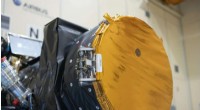
4. CHEOPS (CHaracterizing ExOPlanet Satellite): Launched in 2019, CHEOPS is designed to study the size and physical properties of known exoplanets, especially those discovered by missions like TESS and Kepler. It measures the change in brightness caused by a planet passing in front of its host star, allowing for more precise estimates of the planet's size.
5. ARIEL (Atmospheric Remote-sensing Infrared Exoplanet Large-survey): ARIEL is an ESA mission scheduled for launch in 2029. Its main goal is to study the chemical composition, atmospheric properties, and thermal structures of exoplanets, particularly focusing on warm and hot planets orbiting nearby bright stars.
6. LUVOIR (Large UV/Optical/IR Surveyor): LUVOIR is a proposed space telescope concept under consideration by NASA. If developed and launched, LUVOIR would have the ability to directly image and study exoplanets, providing detailed observations of their surface features and atmospheric properties.
7. Habitable Exoplanet Observatory (HabEx): HabEx is another proposed space telescope concept led by NASA. Its mission would focus on finding and studying potentially habitable exoplanets, particularly those that may be suitable for liquid water on their surfaces.
These missions and projects represent the next generation of planet hunting efforts, aiming to expand our understanding of exoplanets, search for habitable worlds, and unravel the mysteries of the cosmos beyond our own solar system.