1. Discovery of new moon: Cassini discovered several new moons orbiting Saturn, including:
- Calypso: A small moon located between Titan and Dione.
- Helene: A tiny moon with an irregular shape located near Dione.
- Kiviuq: A moon with a retrograde orbit and an unusual shape.
- Tarvos: A moon located between Mimas and Enceladus.
- Ijiraq: A small moon with an elongated orbit located outside of Saturn's main rings.
2. Detailed exploration of Enceladus: Cassini's close flybys of Enceladus revealed several intriguing features, including:
- Geysers: Cassini discovered active cryovolcanic geysers erupting from the moon's south polar region, suggesting the presence of a subsurface ocean.
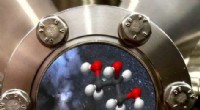
- Ocean's composition: Analysis of the geyser's composition provided evidence for the presence of organic molecules and simple hydrocarbons, hinting at the potential for prebiotic chemistry.
3. Complex geology on Titan: Cassini-Huygens revealed the complexities of Titan's surface and atmosphere, including:
- Methane lakes and seas: The spacecraft discovered vast methane lakes and seas on Titan's surface, indicating a methane-based liquid cycle analogous to Earth's water cycle.
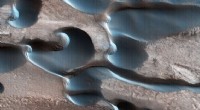
- Diverse landscapes: Cassini-Huygens observed different geological features on Titan, including sand dunes, mountains, river channels, and volcanic domes, suggesting a dynamic geological processes akin to those seen on Earth.
4. Icy moons with potential habitability: Beyond Enceladus, other icy moons of Saturn, such as Titan, Dione, and Tethys, have also shown promising signs of potential habitability, with subsurface oceans beneath their icy crusts.
5. Rhea's active rings: Cassini discovered a tenuous ring of dust and debris around Rhea, the second largest moon of Saturn, suggesting ongoing geological activity on the moon's surface.
6. Enhanced understanding of the rings: Cassini provided a wealth of data that helped scientists better understand the structure, dynamics, and composition of Saturn's iconic rings.
These are just a few of many examples that illustrate the significant advancements made in our understanding of Saturn's moons in the past decade. As we continue to explore the Saturnian system and analyze data collected by Cassini-Huygens and future missions, our knowledge about these celestial bodies will continue to grow and deepen.