Every December, between December 4th and 17th, the night sky turns into a celestial stage for a dazzling astronomical spectacle known as the Geminids meteor shower. While Geminids seem to rain down from the constellation Gemini, their true origins lie far beyond our solar system. The journey of discovering the source of these captivating "shooting stars" is a story of scientific curiosity and technological advancements.
Early Observations:
Observations of the Geminid meteor shower date back to the nineteenth century. In 1862, the Italian astronomer Giovanni Schiaparelli noticed their regular occurrence and proposed that they might be associated with the constellation Gemini. However, it was not until the twentieth century that their connection to an asteroid was established.
Enter Icarus:
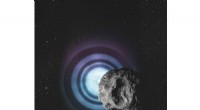
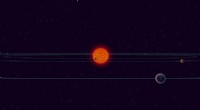
In 1983, the path of the Geminid meteor shower was found to intersect closely with that of a near-Earth asteroid named 3200 Phaethon. This asteroid, about 5 km in diameter, is believed to be the long-sought source of the Geminid meteors. Phaethon's unusual elongated orbit and volatile surface composition fueled speculation that it might be the remnant of a burned-out comet or a planet that experienced catastrophic disruptions in the distant past.
Further Investigations:
The Geminid connection to Phaethon was confirmed by subsequent observations and spectroscopic analyses. Astronomers noted that when Phaethon approached closest to the Sun during its elongated orbit, its outer layers would release a stream of dust and debris. These particles, when intercepted by Earth's orbit, would enter our atmosphere and disintegrate, producing the streaks of light we perceive as meteors.
Unraveling Phaethon's Origins:
Further studies of Phaethon revealed its peculiar nature. While Phaethon's composition resembles that of comets, it lacks the typical features like an extended coma or tail. Instead, it resembles an extinct comet or an anomalous asteroid. Scientists speculate that Phaethon might be a fragment of a larger cosmic body that experienced intense heating during its close approaches to the Sun.
Continuing Exploration:
While the connection between the Geminids and Phaethon has been firmly established, many questions about Phaethon's origins and evolution remain. Ongoing observations, including those from spacecraft missions like Rosetta and OSIRIS-REx, aim to shed further light on the nature of this enigmatic object and its role in producing one of the most mesmerizing meteor showers in our night sky.
Appreciating the Celestial Spectacle:
As we marvel at the Geminids meteor shower each December, let's remember the fascinating story of its discovery and the extraordinary cosmic objects that generate these fleeting but awe-inspiring displays of nature.