Nature of the Bright Spots:
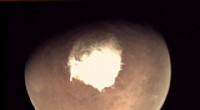
The bright areas on Ceres are highly reflective regions that appear to have a composition different from the surrounding terrain. They are not associated with any known surface features such as craters or mountains, which makes them stand out even more. Observations from spacecraft and ground-based telescopes have revealed several bright spots, each with unique characteristics.
Compositional Analysis:
Detailed spectral analysis of the bright spots indicates the presence of specific minerals. It was found that the composition of these spots is dominated by hydrated salts. In particular, detections of carbonates and magnesium-rich phyllosilicates (which are clay-like minerals) have been reported. These findings suggest that Ceres may have experienced hydrothermal activity in its past, providing evidence for a water-rich environment and complex geological processes.
Possible Origins:
Scientists have proposed various hypotheses to explain the formation of the bright spots. Some of these proposed origins include:
1. Brine Activity: It's possible that subsurface brines containing dissolved salts migrated to the surface of Ceres through fractures or cracks in the crust. As these brines reached the surface, they may have evaporated, leaving behind the mineral deposits that make up the bright spots.
2. Cryovolcanism: Ceres is also known to have regions with topographic features reminiscent of cryovolcanic domes. Cryovolcanism occurs when volatile substances such as water or ammonia erupt onto the surface, forming structures similar to volcanoes but with icy rather than molten materials. If Ceres had experienced cryovolcanic activity, it could provide a mechanism to transport briny material from the interior to the surface and explain the formation of the bright spots.
3. Altered Material by Impacts: Another hypothesis suggests that the bright spots may have formed as a result of impacts on Ceres. Hypervelocity impacts could have excavated and exposed material from deeper layers of the crust, bringing hydrated minerals to the surface. The energy released by the impact could have caused chemical reactions and alterations, leading to the formation of bright-colored deposits.
4. Micro-organism Presence: Some researchers have even speculated about the potential for the bright spots to be related to the presence of microbial life. However, this remains a highly speculative hypothesis, and there's no direct evidence to support the existence of life on Ceres.
Further observations and analyses, including those that may come from future missions, are necessary to better understand the nature and origin of these mysterious bright spots on Ceres, offering valuable insights into the geological history and evolution of this intriguing object.