The map, published in the journal Nature, reveals that the Milky Way is made up of stars of all ages, from recently born stars to stars that are more than 13 billion years old. The oldest stars in the Milky Way are found in the central bulge of the galaxy, while the youngest stars are found in the spiral arms.
The researchers found that the Milky Way is made up of two main components: a thick disc and a thin disc. The thick disc is made up of old stars that formed early in the history of the Milky Way, while the thin disc is made up of younger stars that formed later on.
The researchers were also able to identify several "streams" of stars that are moving through the Milky Way. These streams are thought to be the remnants of smaller galaxies that were once satellites of the Milky Way and were eventually cannibalized by our own galaxy.
The new map of the Milky Way's stellar ages is a valuable resource for astronomers who study the formation and evolution of galaxies. It will help astronomers to better understand how the Milky Way formed and how it has changed over time.
Gaia, a mission for the precise measurement of the positions, parallaxes, proper motions and brightnesses of stars down to about 20th magnitude, is a remarkable feat of engineering and the result of a unique European partnership in space.
Key Facts
- Gaia mission to create most accurate map of the sky
- Gaia to revolutionise astronomy and our understanding of the Milky Way
- First 100,000 results show stellar "traffic jams" and hidden stellar companions
ESA Gaia is making one of the most ambitious scientific maps ever created. It started surveying billions of stars from which astronomers will build the most accurate three-dimensional map of our corner of the Milky Way.
This catalogue will provide fundamental data for research into galactic structure and evolution, stellar physics and the formation of stars and planetary systems.
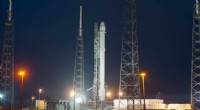
After its launch on 19 December 2013, Gaia spent the first months completing the development and testing of its payload, the spacecraft, data processing ground system and its operations systems.
The satellite is now performing its first scientific survey observation period, which will continue for at least five years.
Gaia will also probe dark matter and the conditions for Earth-like planet formation, while also contributing to the study of the Solar System and the exploration of fundamental physics effects under the extreme conditions of white dwarf and neutron star mergers and black holes.
The spacecraft carries three telescopes with very large mirrors made of carbon-fibre reinforced silicon carbide. These are very light, extremely strong and rigid.
One of the most technically demanding parts of the Gaia mission is its revolutionary instrument and data processing system, which will create a catalogue of more than a billion of the most accurate stellar measurements ever made.