The odd black holes detected by LIGO are thought to have formed through the merger of two smaller black holes. This is because the black holes that LIGO has detected are all much more massive than any black holes that have been observed before, and it is thought that the only way to create a black hole of such a large mass is through the merger of two smaller black holes.
The process of black hole merger is thought to begin when two black holes come close to each other. As the black holes get closer, their gravitational fields begin to interact, and they start to orbit around each other. As they orbit, the black holes lose energy, and their orbits get smaller and smaller. Eventually, the black holes will come so close together that they will merge into a single, larger black hole.
The merger of two black holes is a very violent process, and it releases a tremendous amount of energy. This energy is released in the form of gravitational waves, which are ripples in spacetime. Gravitational waves are very weak, and they are very difficult to detect. However, LIGO is a very sensitive detector, and it has been able to detect the gravitational waves from several black hole mergers.
Can we spot them in the sky?
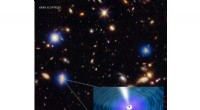
The black holes that LIGO has detected are too far away to be seen with any telescope. However, astronomers are working on ways to detect the electromagnetic radiation that is emitted by black holes. If astronomers can detect the electromagnetic radiation from black holes, they will be able to learn more about these mysterious objects.
Here are some ways that astronomers are trying to detect the electromagnetic radiation from black holes:
* X-ray telescopes: X-ray telescopes can detect the X-rays that are emitted by the hot gas that surrounds black holes.
* Gamma-ray telescopes: Gamma-ray telescopes can detect the gamma rays that are emitted by the jets of matter that are ejected from black holes.
* Infrared telescopes: Infrared telescopes can detect the infrared radiation that is emitted by the dust that is heated by black holes.
Astronomers are also using other methods to search for black holes, such as:
* Gravitational microlensing: Gravitational microlensing is a technique that uses the gravitational field of a black hole to magnify the light from a star.
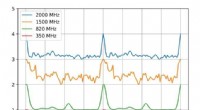
* Radio telescopes: Radio telescopes can detect the radio waves that are emitted by the gas that is accreting onto black holes.
Astronomers are hopeful that they will be able to detect the electromagnetic radiation from black holes in the near future. This will allow them to learn more about these mysterious objects and how they form.