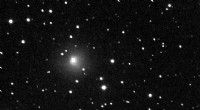
The double-peanut shape of LEDA 074886 is the result of a complex interaction between two smaller galaxies that merged over time. As these galaxies collided and blended together, their gravitational forces sculpted their combined structure into the distinctive peanut-like formation. The galaxy's peculiar shape hinted at its dynamic past and the gravitational forces that shaped its evolution.
The research team, led by Francesco La Barbera of the Institute of Astrophysics and Space Science (IA) at the University of Porto, employed state-of-the-art imaging software called Galfit. This software enabled the astronomers to meticulously reconstruct the galaxy's light distribution by fitting various mathematical models to its observed structure. Through this intricate analysis, they were able to discern the galaxy's intricate features and confirm its double-peanut morphology.
"Our analysis revealed that LEDA 074886 is an exceptional system, comprising a double-peanut bulge embedded within a larger stellar disk," explains La Barbera. "This structure offers valuable insights into the processes that govern galaxy formation and evolution."
The discovery of LEDA 074886 as a double-peanut galaxy contributes to our understanding of the diverse range of galactic morphologies in the universe. It reinforces the notion that galaxies can exhibit complex structures beyond the classical elliptical, spiral, and irregular shapes. Double-peanut galaxies are relatively rare, and researchers seek to uncover more examples to gain a comprehensive understanding of their properties and formation mechanisms.
The findings from this research highlight the importance of advanced imaging software in unraveling the hidden secrets of cosmic structures. By leveraging these tools, astronomers are provided with a powerful means to explore and analyze the vast array of galaxies in the universe, leading to a deeper comprehension of their formation, evolution, and interactions.