1. Depletion of Gas: Star formation requires a sufficient amount of gas, primarily hydrogen and helium, within the galaxy. Over time, galaxies may use up a significant portion of their gas reserves through star formation and various other processes. Once the gas reservoir is depleted, the galaxy will have limited material available to form new stars.
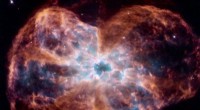
2. Energy Feedback from Star Formation: As massive stars form and evolve, they release enormous amounts of energy through stellar winds and supernova explosions. This energy can heat the surrounding gas and create turbulence, making it harder for new stars to form. This phenomenon is known as feedback from star formation, and it can effectively regulate the rate of star formation within a galaxy.
3. Active Galactic Nuclei (AGN): Some galaxies host supermassive black holes at their centers, which can give rise to active galactic nuclei (AGN). AGN can generate powerful jets of high-energy particles and radiation that can heat the interstellar gas and disrupt star formation. The strong AGN activity can inhibit the formation of new stars within the galaxy.
4. Galaxy Mergers and Interactions: When galaxies collide or interact gravitationally, it can lead to the disruption of their structures and gas reservoirs. Such interactions can trigger intense star formation, followed by a period of star formation suppression due to the disturbed gas dynamics and depleted gas supply.
5. Environmental Effects: Galaxies located in dense galaxy clusters or in regions with harsh external conditions, such as strong ultraviolet radiation or hot, diffuse gas, may face difficulties in retaining their gas and initiating star formation. The pressure from the surrounding environment can prevent the galaxy from accumulating sufficient gas for star formation.
6. Age and Evolutionary Stage: Galaxies evolve over time, and their star formation activity can decline as they age. Older galaxies may have already exhausted their gas supply and reached a state where star formation is minimal or has ceased altogether.
It's important to note that these factors can influence star formation in different galaxies to varying degrees, and the interplay of multiple mechanisms often determines the cessation of star formation in a particular galaxy.