Rarity of Earth-like Conditions: The conditions necessary for the formation and evolution of life as we know it are quite specific and may be rare in the universe. This includes factors such as the right temperature range, the presence of liquid water, the composition of the atmosphere, and the stability of the planetary system.
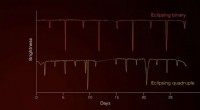
Observational Limitations: Detecting and characterizing exoplanets is challenging, especially when it comes to finding Earth-sized planets orbiting in the habitable zones of their stars. Many of the exoplanets we have found so far have been detected using indirect methods, which provide limited information about their properties.
Diversity of Planetary Systems: The process of planet formation and evolution can lead to a wide range of planetary systems, each with its own unique characteristics. This diversity makes it difficult to predict exactly what kind of planetary systems we will find and where. Some systems may have multiple Earth-sized planets, while others may have no planets at all.
Age and Evolution: The age of a planetary system plays a crucial role in its evolution. Earth is about 4.5 billion years old, which has allowed for the development of complex life forms. Younger systems may not have had enough time for such evolution to occur, while older systems may have undergone significant changes over time.
Selection Bias: Our current methods of detecting exoplanets may be biased towards certain types of systems. For example, it is easier to detect large planets orbiting close to their stars, which may make it more difficult to find smaller planets like Earth.
Incomplete Understanding: Our understanding of planet formation and evolution is still incomplete, and there may be factors that we do not yet fully comprehend. This can make it difficult to accurately predict the prevalence and characteristics of Earth-like planetary systems.
Despite these challenges, astronomers continue to make progress in the field of exoplanet research, and as our observational techniques improve and our understanding deepens, we may eventually come closer to finding planetary systems like our own.