Here is an overview of what we know about Europe's Mars lander:
1. Mission Overview:
- The ExoMars Rosalind Franklin rover is a six-wheeled, solar-powered robotic vehicle designed to explore the surface of Mars.
- The mission's primary scientific objective is to search for signs of past or present life on Mars by investigating the planet's geology and analyzing samples collected from the Martian surface.
- The rover is named after Rosalind Franklin, an English chemist and X-ray crystallographer who made significant contributions to understanding the molecular structures of DNA and RNA.
2. Launch and Landing:
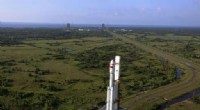
- The ExoMars Rosalind Franklin rover launched from the Baikonur Cosmodrome in Kazakhstan on September 20, 2022, aboard a Proton rocket provided by Roscosmos.
- The planned landing site for the rover is Oxia Planum, a region of Mars located near the equator that scientists believe may have had environmental conditions favorable for life in the past.
- The landing is expected to take place in June 2023, following a complex entry, descent, and landing sequence.
3. Scientific Instruments:
- The rover carries a range of scientific instruments to investigate the Martian environment and search for evidence of past or present life. These instruments include:
- PanCam (Panoramic Camera): provides high-resolution images of the Martian landscape and rock formations.
- WISDOM (Water Ice Subsurface Detection on Mars): uses ground-penetrating radar to detect the presence of water ice beneath the surface of Mars.
- MicrOmega: a spectrometer used to analyze the chemical composition of rocks and soil samples.
- MOMA (Mars Organic Molecule Analyzer): an instrument designed to detect organic molecules in the Martian environment, which could be potential indicators of past life.
- ADRON (Analyzer of Space Radiation): measures the levels of radiation on the Martian surface and its impact on potential Martian life forms.
4. Collaboration:
- The ExoMars mission is a joint endeavor between ESA and Roscosmos, representing a significant collaboration in space exploration between Europe and Russia.
- Scientists and engineers from both agencies have worked together on the development, construction, and operation of the ExoMars Trace Gas Orbiter and the Rosalind Franklin rover.
5. Challenges and Significance:
- Landing on Mars is a complex and challenging endeavor, and there is always a risk associated with such missions.
- If successful, the ExoMars Rosalind Franklin rover could provide valuable insights into the history, geology, and potential for life on Mars, contributing to our understanding of the Red Planet and our place in the solar system.