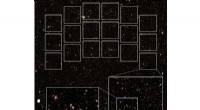
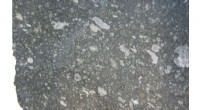
The focus of the study is a volcanic complex located on the Moon's near side, known as Ina. Ina is a region characterized by volcanic activity that occurred during a period called the Late Heavy Bombardment (LHB), which took place approximately 3.9 billion years ago and is considered a crucial epoch in shaping the Moon's surface.
However, the age of Ina has long been a puzzle for planetary scientists. Geologically, it appeared to be one of the youngest volcanic sites on the Moon. Yet, when scientists measured the number of impact craters overlying Ina, they obtained ages that were significantly older, suggesting that the volcanic activity occurred several hundred million years earlier than initially estimated.
This age discrepancy prompted the research team to investigate further, using high-resolution images and detailed analyses. They discovered that Ina's volcanic features, such as the volcanic cones, lava flows, and pyroclastic deposits, are remarkably well-preserved and have undergone minimal degradation over time.
This led them to propose a fascinating explanation for Ina's deceptive youthful appearance. The primary factor contributing to its preserved state is the unique protective layer that coats the volcanic region. This layer, dubbed "regolith fluff," is made up of fine, powdery material that effectively blankets and shields the volcanic features, preventing erosion and degradation from impacts.
The presence of this fluffy layer is believed to be the result of Ina's location within a shallow basin, which acts as a sheltered environment for accumulating and retaining the protective material. This basin configuration provides a favorable setting for the regolith fluff to build up and effectively preserve the underlying volcanic features.
The study's findings challenge our previous understanding of lunar volcanism and emphasize the role of surface processes in modifying and concealing the true ages of geological formations on the Moon. They highlight the importance of detailed surface observations and analyses in accurately deciphering the geological history of our celestial neighbors.
Further studies are warranted to explore similar regions on the Moon and investigate whether the unusual combination of localized regolith fluff and basin topography is responsible for preserving other young volcanic sites. By uncovering these hidden secrets of the Moon's past, we gain a better understanding of the complex processes that shaped our cosmic neighbor and its enigmatic geological history.