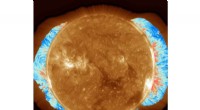
Sunspots are dark, cooler areas on the surface of the Sun that are caused by intense magnetic activity. These magnetic fields can be very strong, and they can cause the plasma in the sunspot to become very hot and dense. This plasma can then emit radio waves, which can be detected by radio telescopes.
The radio waves emitted by sunspots can vary in frequency and intensity, depending on the strength of the magnetic field and the density of the plasma. The strongest radio emissions are typically produced by sunspots that are located near the center of the Sun, where the magnetic fields are the strongest.
Sunspot radio emissions can be used to study the Sun's magnetic activity, and to track the movement of sunspots across the Sun's surface. This information can be used to predict solar flares and other types of solar activity that can affect Earth.
Here is a more detailed explanation of how sunspots produce radio waves:
* The magnetic fields in sunspots can cause the plasma in the sunspot to become very hot and dense. This plasma can then emit radio waves, which can be detected by radio telescopes.
* The radio waves emitted by sunspots can vary in frequency and intensity, depending on the strength of the magnetic field and the density of the plasma. The strongest radio emissions are typically produced by sunspots that are located near the center of the Sun, where the magnetic fields are the strongest.
* Sunspot radio emissions can be used to study the Sun's magnetic activity, and to track the movement of sunspots across the Sun's surface. This information can be used to predict solar flares and other types of solar activity that can affect Earth.
Additional information:
* Sunspots are not always visible from Earth. They can only be seen when they are located on the side of the Sun that is facing Earth.
* Sunspots can last for a few days or for several months.
* The largest sunspots can be as large as the Earth.
* Sunspots are a normal part of the Sun's activity cycle. They occur more frequently during periods of high solar activity, and less frequently during periods of low solar activity.