The Tarantula Nebula is a vast, star-forming region located in the Large Magellanic Cloud, a satellite galaxy of our Milky Way. It is one of the most active star-forming regions in the Local Group of galaxies, and is home to some of the most massive and luminous stars known.
NASA's Stratospheric Observatory for Infrared Astronomy (SOFIA) is a flying observatory that is equipped with a powerful infrared telescope. SOFIA is able to observe the Universe in infrared light, which allows it to see through the dust and gas that obscures visible light. This makes SOFIA an ideal tool for studying star-forming regions like the Tarantula Nebula.
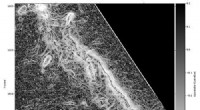
SOFIA has been used to study the Tarantula Nebula in detail, and has discovered a number of new stars that are forming in the region. These stars range in size from small, Sun-like stars to massive stars that are hundreds of times more massive than the Sun.
SOFIA's observations have also helped to shed light on the process of star formation. By studying the Tarantula Nebula, astronomers have been able to learn more about how stars form from clouds of gas and dust, and how they evolve over time.
SOFIA's observations of the Tarantula Nebula are just a small part of its mission to study the Universe in infrared light. SOFIA is a powerful tool that is helping astronomers to learn more about the formation and evolution of stars, and the composition and structure of the Universe.
Here are some of the specific stars that SOFIA has discovered in the Tarantula Nebula:
* R136a1: This is one of the most massive stars known, with a mass of about 265 times that of the Sun. It is also one of the most luminous stars known, with a luminosity of about 10 million times that of the Sun.
* R136a2: This is another massive star in the Tarantula Nebula, with a mass of about 195 times that of the Sun. It is also very luminous, with a luminosity of about 8 million times that of the Sun.
* R136c: This is a cluster of stars that is located near R136a1 and R136a2. The cluster contains several massive stars, including one that is about 150 times more massive than the Sun.
These are just a few of the many stars that SOFIA has discovered in the Tarantula Nebula. SOFIA's observations are helping astronomers to learn more about the formation and evolution of stars, and the composition and structure of the Universe.